
Murka's Story
Whilst working in Amboseli National Park, the Trust’s Mobile Veterinary unit, funded by Vier Photen, headed by Dr. Jeremiah Poghorn, received a report of 2 abandoned elephant calves in Tsavo West National Park, one on Muhoho Ranch(rescued later and named Makireti) and the other near Rombo which had a spear deeply embedded in its forehead.
Deciding to deal with the injured Rombo calf first, the team arrived in the area at about 2 p.m. during the afternoon of 7th July, 2010 and were directed to the general location of the calf by a Ranger. The orphan was soon spotted, running from a nearby stream to hide in thick bush. A long spear, bent backwards, was protruding from its head lodged deep into the skull midway between the eyes. There were also other wounds on its body, one near the tail being very deep and fresh, exposing raw flesh and likely to have been caused by an axe.


Several attempts to encircle and overpower the calf proved fruitless, for being nearer two years of age than one, it was very strong and, understandably, extremely aggressive, charging anyone on sight through the thick bush. Eventually, having had to scale a tree in order to escape being crushed, the Vet managed to dart the calf, loaded with immobilizing drug, and once she was down was able to assess the extent of the injuries. The spear had penetrated some 20 cms. through the skull and into the nasal passage sinuses at the top of the trunk. It was with great difficulty, using wire cutters and great deal of strength that Dr. Poghon managed to extract it, leaving a deep hole in the head through which air was being expelled. The wounds on the body were severe too, filled with magots, but mercifully appeared more superficial without having penetrated any vital body organ. Once all were clearned and anointed with antibiotic powder, a long acting antibiotic was injected intramuscularly, after which, with the help of the local community, the calf was loaded into the back of a vehicle, and driven to the Orphaned Elephant Stockades at Voi. Despite problems with the vehicle en route, she arrived safely, and was placed in a Stockade alone for the night pending being airlifted to the Nairobi Nursery the next morning.


She arrived at the Nursery during the morning of the 8th July, lying on the usual Rescue Tarpaulin with her legs bound, but once the legs had been released, she was on her feet and bent on killing anyone in sight, still with a lot of fight in her and bent on revenge for what humans had done to her. The “Taming Stockade” has a partition in the middle to enable the Keepers to hurriedly climb up and onto a platform to escape as the elephant runs round the partition in order to get at them! This particular newcomer gave them more than the usual run-around!
That night, the calf, who had been named Murka (after the nearby Murka Mines) collapsed and fell into a life threatening coma, which enabled us to insert an intravenous Dextrose drip into an ear vein and assess the extent of her injuries and deal with them firsthand. There was not one person present who was not horror struck and astonished that a human could be so brutal to an innocent baby that did not even have tusks! Breath was escaping through the wound in her head, and the body wounds raw and extensive. It beggared belief that humans could be so cruel and brutal to a baby elephant, especially an orphan whose mother they had probably also killed. The spear was typical of those carried by Masai tribesmen, who enjoy a reputation of being more tolerant to wildlife, but obviously the sadistic owner who inflicted such horrendous injuries on an innocent baby elephant does not fall into that category!


We did not expect this calf to even come round, let alone live, and contemplated removing the drip to allow her to slip away peacefully to end her agony and suffering. However, much to everyone’s astonishment, she was up by 9 a.m. the next morning but still harbouring extreme hatred of humans. However, she was sufficiently weak for the Keepers to be able to restrain her and offer her milk and water from a bottle, which she drank hungrily, desperate for more. However, the fighting spirit was still with her, and the Keepers had to make a hurried escape. Since then, she will come to inspect anything white that one might be holding in the hope that it's milk, but has to be fed through the bars of the Stockade door, still far too aggressive to risk closer contact. She has to be fed water from a bottle as well, for she appears unable to draw water up into the trunk, because of the internal damage and the gaping hole at the top which prevents the suction effect.


Murka has a strong will to live, and also a strong desire for revenge for what she has suffered at the hands of humans. In order to clean her wounds, she has to be sedated with Stressnil before anyone can attend to them, since physically overpowering her with sufficient manpower causes more stress which could prove counter-productive. The body wounds, although deep and horrendous, are superficial and will heal with time, but the head wound is more serious and we can only pray that it will not interfere with her breathing, or the use of her trunk, for life. After l0 days in the Stockade, we tried to allow her out with the other orphans, hoping that she might take her cue from them, but instead she was bent on escape. So, not without a great deal of difficulty, she was eventually overpowered and returned to the Taming Stockade.
Time is a great Healer, and already Murka is calming down and learning to love her Keepers, but it will take a very long time for this baby elephant to be able to have any trust in a human being again.


Adopt Murka for yourself or as a gift.
Important Note: Thank you for considering an adoption. Each orphan needs more than one foster parent: your adoption donation will be processed by the SWT UK and Kenya to help all the orphans in our care.
Current Age
15 years old
Gender
Female
Rescued date
7 July 2010
Rescue Location
Tsavo Ecosystem, Rombo Group Ranch
Date of Birth (approximate)
26 November 2008
Reason Orphaned
Poaching
Age at Rescue
19 months old (approx)
Current Location
Living Wild
Murka's featured photos


Our digital adoption programme includes the following:
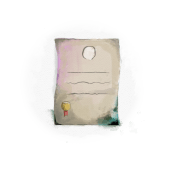
Personalised adoption certificate.

Monthly email update on your orphan and the project.
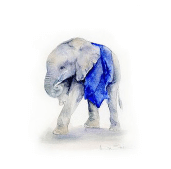
Monthly watercolour by Angela Sheldrick.
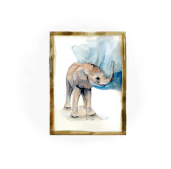
Access to special content; latest Keepers' Diaries, videos and photos
Give Murka the gift of life by adopting today.
Latest updates featuring Murka
Murka's latest photos

Murka chasing a buffalo

Murka and Olsekki

Murka covered in mud

Murka in the water

Murka in the water

Murka with the orphans

Murka and Karisa browsing together

Murka and Kitirua