A survivor of a horrific snare injury, we believe this special little elephant had a guardian angel watching over her


Current age
2 years old
Gender
Female
Rescued date
4 January 2026
Rescue location
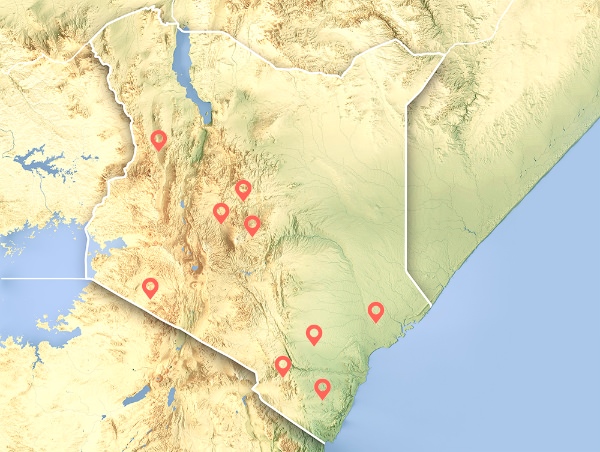
North Coast, Lamu County
Date of birth (estimate)
24 July 2024
Reason orphaned
Poaching
Age at rescue
17 months old (approx)
Current location
Kaluku Unit
Over the New Year holiday weekend, KWS reported that Ulinzi Africa Foundation had spotted an injured elephant calf in Kipini Conservancy, in Lamu County on the northern coast of Kenya. Video footage confirmed that she had a snare tightly wound around her front left leg, reducing her mobility to a painful limp. She was on her own and clearly struggling.
We mobilised immediately, dispatching the SWT helicopter to Lamu and coordinating with ground teams to begin the search. The area was heavily forested, with thick canopy cover that made it very difficult to spot anything from the air or on the ground. Although the calf had been reported recently, it soon became clear that she had been alone for much longer.
Despite an extensive aerial-and-ground search effort, we found nothing that day. We returned the following morning and searched again, with the same disappointing result. The forest concealed her completely. With no further sightings, we returned to Kaluku while ground teams continued searching the area.
Then, on the morning of 4th January 2026, a breakthrough came. The calf had been located near a waterhole and a drone had been deployed to track her movements. We mobilised immediately. Dr Lawi met the team at Kaluku and the SWT helicopter flew north to Kipini Conservancy.
We landed a few kilometres away to avoid disturbing the elephant and continued on foot. It was a challenging situation: Communication was limited and visibility was extremely poor. Taru climbed a tree to regain signal and retrieve the drone’s coordinates. It turned out that the calf was closer than we realised.
Even with her compromised mobility, we knew that we only had one real chance to pull off the rescue, or run the risk of her evaporating into the forest. Taru and Roan were quite a bit ahead of the rest of the team — but when they spotted her, they knew they didn’t have a minute to spare. They restrained her and managed to bring her to the ground. This was no small feat: She was about two years old, completely wild and propelled by adrenaline.
While Taru struggled to hold her, Roan cut away the rope snare. This was when the full extent of her injury became clear: The snare had sliced through an artery. It had been acting like a tourniquet, and once removed, the wound started spouting blood.
As they waited for the rest of the team to arrive, Roan pinched the artery closed while Taru held her steady. Dr Lawi, who had been repositioning with the equipment, rushed in and fully sedated her so that he could attend to her injury. First, he had to clamp and fold the affected artery before suturing it firmly closed. This effectively stopped the bleeding.
While the immediate crisis was under control, it was clear that this calf’s saga was far from over. The injury was serious and would require multiple follow-up treatments. Added to this, she had clearly been on her own for some time and was at a vulnerable age. The Kenya Wildlife Service authorised her rescue.
Taru trekked back to the helicopter and repositioned to a nearby clearing. The calf was carried — with great effort — on a stretcher to the edge of the forest. It took the strength of the entire team to load her on board, with all seats removed to make space. Given her size and the distance to Kaluku, a bigger aircraft was needed for the main travel leg. The helicopter shuttled the calf for the 30-minute flight to the nearest airstrip and transferred her into the SWT Caravan, which had moved into position while the treatment unfolded.
We named the calf Lamuu, in honour of her origins.
Even once at Kaluku, Lamuu’s outcome was by no means secure. The snare had caused a deep ring wound, encircling the entire leg. It required daily cleanings and multiple follow-up treatments.
Given her age and the ordeal she had been through, we expected Lamuu to be very wary of people. However, she just seemed relieved to be helped and in safe hands. She took to her Keepers right away, accepting a milk bottle and approaching them with a friendly, outstretched trunk. Lekoli, one of our senior Keepers, was put in charge of her day-to-day care. Lamuu soon became extremely attached to him, padding quietly behind him like a shadow. During the initial weeks when she was on ‘bed rest’ in her stockade, she was a model patient, proffering her injured leg to Lekoli for daily cleanings and green clay treatments.
Soon after Lamuu arrived, Kaluku welcomed another orphan of a similar age. Like Lamuu, Sibu came to us with serious injuries — she had been speared in the shoulder and found abandoned and alone. Given their shared experiences and the fact that they were recuperating in stockades close to each other, these girls became instant best friends, supporting each other through their respective healing journeys. As the weeks passed and their wounds improved, their world expanded from bed rest to small jaunts around the compound, before they finally joined the rest of the Kaluku herd out in the bush.
There is another special detail to Lamuu’s story which makes her particularly precious to us: After a fruitless three-day search, her situation was starting to look hopeless. But then, she was found the morning Kirsty Van Zeller, a cherished member of the Sheldrick Wildlife Trust family, passed away from a three-year battle with cancer.
We feel sure that a guardian angel was watching over this little elephant, making sure she ended up in safe hands — a guardian who has been very present throughout her remarkable recovery, too. In our minds, Lamuu is inextricably linked to Kirsty forever.
Over the New Year holiday weekend, KWS reported that Ulinzi Africa Foundation had spotted an injured elephant calf in Kipini Conservancy, in Lamu County on the northern coast of Kenya. Video footage confirmed that she had a snare tightly wound around her front left leg, reducing her mobility to a painful limp. She was on her own and clearly struggling.
We mobilised immediately, dispatching the SWT helicopter to Lamu and coordinating with ground teams to begin the search. The area was heavily forested, with thick canopy cover that made it very difficult to spot anything from the air or on the ground. Although the calf had been reported recently, it soon became clear that she had been alone for much longer.
Despite an extensive aerial-and-ground search effort, we found nothing that day. We returned the following morning and searched again, with the same disappointing result. The forest concealed her completely. With no further sightings, we returned to Kaluku while ground teams continued searching the area.

View diary updates from across all our orphan units as written by the Keepers

Speared through the shoulder, Sibu was on her last legs by the time she was found. Now best friends with Lamuu, she is a lovely, quiet elephant who has overcome a lot in her life.
By adopting, you play a vital role in the life of an orphaned elephant, rhino, or giraffe — helping us provide the round-the-clock, loving attention each one needs and deserves over many years, so they can ultimately reclaim their place in the wild.
Your adoption supports the 100+ orphans in our care at any given time, covering the cost of milk and food supplies, Keepers' salaries, veterinary treatment, and other essentials.

Celebrate your adoption with a personalised certificate, ready for you or your lucky gift recipient to print and display!

Each month, we send a detailed update about our Orphans’ Project direct to your email inbox, featuring photos, stories, and special highlights.

Adopters also receive the latest from the Keepers’ Diaries, a monthly watercolour inspired by the orphans, and occasional videos from the field.