A survivor of storms, lion attacks, and several weeks on his own


Current age
17 months old
Gender
Male
Rescued date
1 March 2026
Rescue location
Tsavo Ecosystem, Taita Ranches
Date of birth (estimate)
30 April 2025
Reason orphaned
Unknown
Age at rescue
10 months old (approx)
Current location
Kaluku Unit
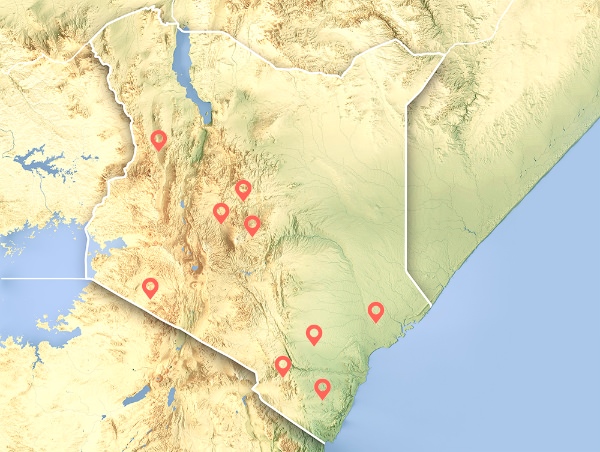
His story with us began in February, when we received reports of a possible orphaned elephant in Bungule, in the foothills of Mount Kasigau in the southern reaches of the Tsavo ecosystem. Each time, the calf was seen for a fleeting moment before he disappeared back into the bush. Our pilots conducted several targeted patrols over the area, but were unable to find him. Given that it was the peak green season, visibility was a challenge, and the calf was clearly skilled at hiding himself.
On 27th February, we finally had a breakthrough: the Kenya Wildlife Service reported that the local community had eyes on the orphan, who was still very much alone and looking increasingly gaunt. The SWT helicopter raced to the scene, but just before we arrived, he bolted. We watched as he zigzagged past everyone on the ground and then evaporated once more into the bush.
The rest of the afternoon was spent looking for the calf. We called in aerial reinforcements, but the searches of the helicopter, fixed-wing plane, and ground teams all turned up empty. It was easy to spot his tracks, which crisscrossed the farmland, but the little elephant remained elusive. He was clearly terrified and determined to keep himself hidden.
The final week of February had been rocked by tumultuous weather, but the night of the attempted rescue, a truly terrific storm swept through Tsavo. For hours, lightning sliced the sky, thunder growled across the region — quite literally shaking the ground — and rain poured down in sheets. As the tempest swirled around us, our hearts broke thinking of the little calf braving this onslaught on his own and how frightened he must have been.
It was a miracle that the calf had lasted for as long as he did without his mother's milk or the protection of his herd. Now, it seemed too much to hope that he had survived such a storm.
But as we have seen time and again, one must never lose hope. On the afternoon of 1st March, we received a call that two local Maasai men had managed to capture the calf when he furtively emerged from hiding. After the first rescue attempt, everyone in the community had rallied around the little orphan and kept a keen eye out for him.
We leapt into action and flew south, where the calf's rescuers had prudently tied him to a tree, so as to avoid another disappearing act. At about ten months old, he was still very small, but it was nevertheless a tight squeeze to fit him inside the helicopter. To forever connect him to his origins, we named him Bungalu.
It was evening by the time our precious cargo landed at Kaluku. We carefully offloaded Bungalu and drove him over to the stables where Kaikai is housed. Rescued as a neonate, we had navigated Kaikai's most fragile period and felt she was ready to play a big sister role.
Only once we settled Bungalu into a stable did the full extent of his odyssey reveal itself. His back was laced with deep claw marks. The wounds had scarred over, but he had clearly been pursued by lions — and based on the number of claw marks, he was very lucky to have survived the attack. It seems probable that this is how he initially came to be separated from his herd.
Bungalu was a very hard-won case. He came to us riddled with parasites, no doubt from the time he spent attempting to forage his way to a full stomach. (A calf of his age is still milk-dependent, and would be relying on nursing from their mother to get much of their needed nutrients.) He was skin-and-bones and really struggled to put on weight, even as the Keepers plied him with milk bottles and healthy greens. We also grappled with bleeding ulcers. It’s only recently that he has started to fill out.
There were emotional scars, too. For the first several weeks, he barely slept, rocking in the back of his stable and just catching a few minutes of rest at a time. Calves of his age typically lie down to sleep. For those lonely weeks on his own, he was in constant fight-or-flight mode, and a part of him is probably still trying to shake those feelings.
After all he experienced, one might have expected Bungalu to be withdrawn or even aggressive, but he embraced his Keepers from the outset. As we have seen with other orphans, he had spent so long on his own that he was just relieved to be cocooned amongst a family once more. There was very little settling-in period; by the first night, he was bottle-feeding and suckling his Keepers' fingers.
Bungalu and Kaikai make for a wonderful, odd couple. As hyper as she is, he is staid. While she dashes ahead, he happily lopes behind. Bungalu is content to follow Kaikai's lead — which is fortunate, because she wouldn't have it any other way! Sometimes, when her bossiness gets a bit out of hand, he keeps her in check with a firm headbutt, but he mostly lets her continue her little reign uncontested.
While many parts of Bungalu's story remain a mystery, we know that this brave little elephant survived an epic ordeal. He had to navigate so much on his own — starvation, predatory lions, and formidable storms. Now, his days of loneliness are behind him. He will grow up with his Keepers and elephant friends by his side, loving and supporting him every step of the way.
His story with us began in February, when we received reports of a possible orphaned elephant in Bungule, in the foothills of Mount Kasigau in the southern reaches of the Tsavo ecosystem. Each time, the calf was seen for a fleeting moment before he disappeared back into the bush. Our pilots conducted several targeted patrols over the area, but were unable to find him. Given that it was the peak green season, visibility was a challenge, and the calf was clearly skilled at hiding himself.

View diary updates from across all our orphan units as written by the Keepers

Bungalu is a special little elephant who survived a true odyssey to be here today — weeks on his own, dodging storms of epic proportions and even a lion attack.
By adopting, you play a vital role in the life of an orphaned elephant, rhino, or giraffe — helping us provide the round-the-clock, loving attention each one needs and deserves over many years, so they can ultimately reclaim their place in the wild.
Your adoption supports the 100+ orphans in our care at any given time, covering the cost of milk and food supplies, Keepers' salaries, veterinary treatment, and other essentials.

Celebrate your adoption with a personalised certificate, ready for you or your lucky gift recipient to print and display!

Each month, we send a detailed update about our Orphans’ Project direct to your email inbox, featuring photos, stories, and special highlights.

Adopters also receive the latest from the Keepers’ Diaries, a monthly watercolour inspired by the orphans, and occasional videos from the field.